I've lost count of how many times I've taken clients to see apartments in Arco do Cego and watched them stop in their tracks when we reach the historic core. Most people have never even heard of this neighborhood. They're busy looking at Príncipe Real, Campo de Ourique, maybe Avenidas Novas.
And then we turn the corner into those low-rise pastel buildings around the park, and suddenly everything changes.
"Wait, what is this place?"
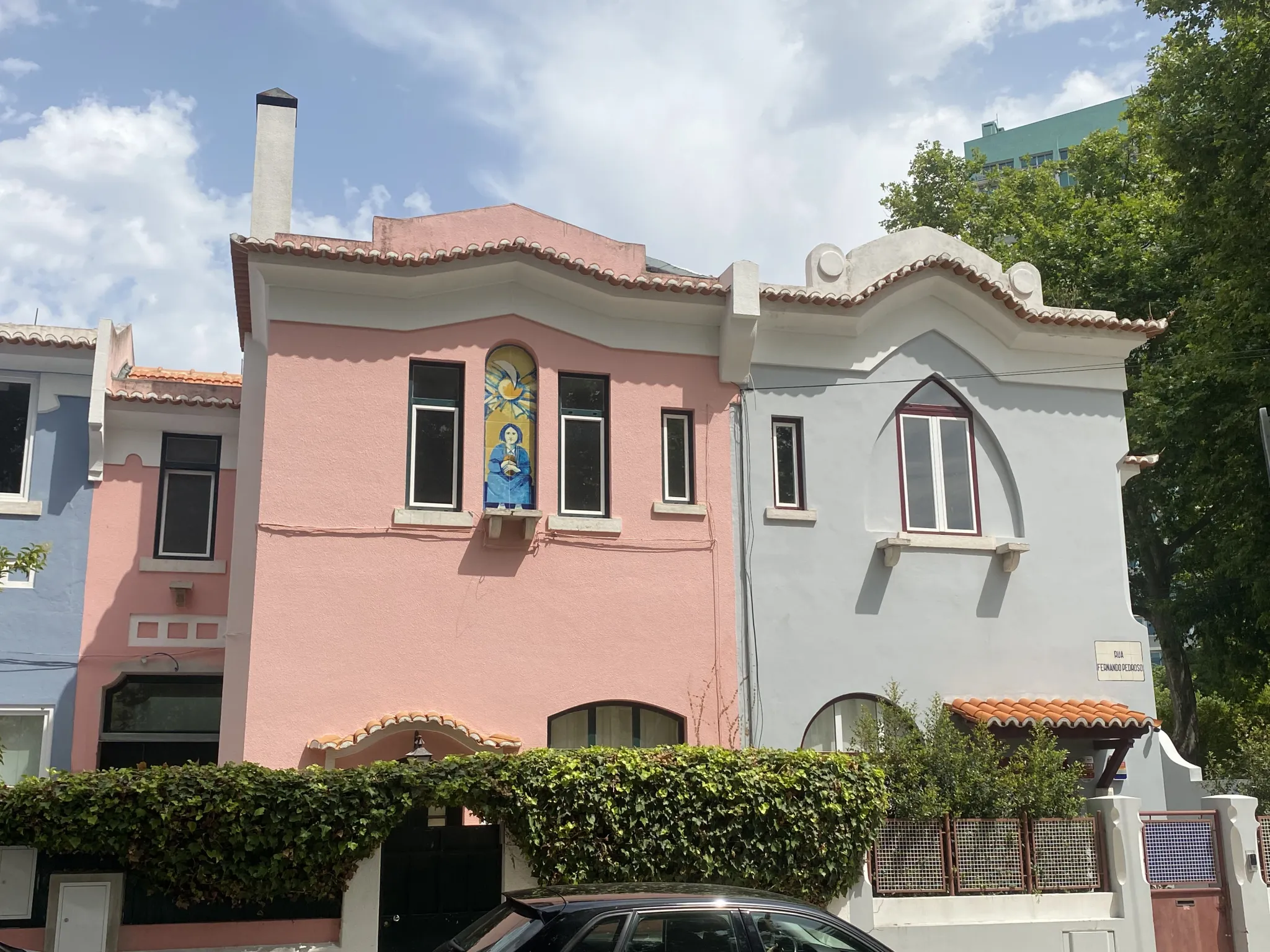
That's usually the first question. Because Arco do Cego has something almost no other central Lisbon neighborhood has: an entire block of 2-3 story early 20th-century buildings that were designed as a cohesive architectural project. They face each other around green spaces, forming this intimate little village inside the city. It's charming, it's quiet, and honestly, it's one of the most beautiful pockets of residential Lisbon that tourists never see.
Where Is It, Exactly?
Arco do Cego sits tucked between Saldanha, Alameda, and Areeiro. If you're looking at a map, it's easy to miss because it's not one of the big-name neighborhoods. But that's part of what makes it special.
You're literally minutes from:
- Multiple metro lines (red, yellow, green)
- The Roma-Areeiro train station
- Dozens of bus routes
- Shopping centers
- Parks
- Restaurants and supermarkets
I always tell people: if you want to be central without being in the middle of tourist chaos, this is one of the best spots in the city.
The Historic Core: What Makes It So Special
Here's what sets Arco do Cego apart from other Lisbon neighborhoods.
At its heart is this original block of low-rise buildings—pastel-colored, beautifully preserved, arranged in a geometric pattern that creates its own little world. These buildings were originally designed as a planned workers' neighborhood in the early 1900s and later modernized. They're not grand or imposing. They're human-scaled. Charming. Warm.
When you walk through this core area, you feel like you've stepped into a quieter version of Campo de Ourique, except with even less noise and more green space.
The buildings face each other around Jardim Arco do Cego—a lovely neighborhood park with benches, trees, a playground. Kids play there after school. Neighbors chat. It's the kind of community setup that makes people who move here from bigger cities say, "Oh, this is what I was missing."
The apartments in these historic buildings have high ceilings, traditional Portuguese layouts, charming balconies, and lots of architectural detail. Most don't have elevators, which limits who can live there, but if you're okay with stairs, these are some of the most character-filled homes in central Lisbon.
The Surrounding Modern Residential Area
Now, here's where it gets interesting.
Surrounding that historic core are newer mid-rise buildings from the 1950s onward—usually 5-8 stories tall. These offer a completely different lifestyle: elevators, larger layouts, better insulation, modern plumbing, and sometimes even parking (rare but possible in this part of Lisbon).
So depending on what you're looking for, you can choose:
Historic charm (2-3 story buildings, high ceilings, no elevator, intimate village feel)
or
Modern convenience (mid-rise with elevators, bigger kitchens, better soundproofing, easier daily living)
And you're still in the same neighborhood, still walkable to everything, still surrounded by that same calm, residential vibe.
I've had clients who specifically wanted the historic buildings for the character, and others who said, "I love the neighborhood, but I need an elevator." Both work. That's what makes Arco do Cego so versatile.
What It Actually Feels Like
The first thing people notice when we walk through is how peaceful it is. You're surrounded by major transit hubs—Saldanha, Alameda, Areeiro—but the interior streets of Arco do Cego feel residential and calm.
Tree-lined. Flat. Safe. People walking their dogs. Kids biking around the park. Neighbors who greet each other.
It's not flashy. It's not going to give you that postcard Lisbon aesthetic with dramatic viewpoints and colorful azulejo-covered buildings. But it's genuinely livable in a way that a lot of the more famous neighborhoods aren't.
Transit Access Is Legitimately Excellent
Within about a 10-minute walk, you can reach:
- Saldanha Metro (two lines)
- Alameda Metro (two lines)
- Roma-Areeiro train station
From Arco do Cego, you're roughly:
- 10 minutes to the airport
- 8 minutes to Baixa
- 12 minutes to Parque das Nações
This is one of the most connected neighborhoods in Lisbon. If you don't want a car—or you want the option to not use one—this is ideal.
What You'll Pay
As of 2025-2026, prices in Arco do Cego vary depending on which type of building you're looking at.
Historic low-rise buildings (the charming village core): around €5,000-€8,000 per square meter, depending on condition
Newer mid-rise buildings (surrounding streets): around €6,000-€9,000+ per square meter
Renovated premium units: can reach €8,000-€10,000 per square meter
Older units needing work: sometimes available in the €4,500-€6,000 per square meter range
Compare that to Príncipe Real (easily €10,000-€12,000 per square meter) or even parts of Avenidas Novas, and you start to see why people who discover Arco do Cego often end up buying here.
Who Actually Lives Here
Arco do Cego attracts a specific type of buyer—usually someone who's done their homework, knows what they actually need in daily life, and isn't just chasing the trendiest neighborhood.
I see a lot of:
- Remote workers who want a calm home base
- Young families who need walkability, safety, and a park
- Retirees who want convenience without the tourist madness
- Long-term expats who've lived in Lisbon for a while and know what matters
It's not the neighborhood for people who want nightlife at their doorstep or dramatic river views. But for people who want to actually live a functional, peaceful life in central Lisbon? It's hard to beat.
What You Won't Find Here
Let's be honest about what Arco do Cego isn't.
It's not a nightlife hub. There are cafés and local restaurants, but if you want rooftop bars and late-night energy, you'll head elsewhere.
It doesn't have river views. You're inland, surrounded by buildings.
It's not going to give you that "wow" factor that Alfama or Graça might give visitors. The historic core is beautiful, but it's a quiet, residential kind of beautiful—not dramatic or Instagram-ready.
For some people, that's a dealbreaker. For others, it's exactly what they're looking for.
The Two Lifestyle Zones
Here's how I explain it to clients:
Zone 1: The Historic Core This is the 2-3 story pastel buildings around the park. Quiet, intimate, charming, village-like. If you want to feel like you live in a small European neighborhood but still be in central Lisbon, this is it.
Zone 2: The Surrounding Modern Area Just a few steps beyond the historic core, the streets open up into more typical mid-rise Lisbon. More services, more parking, larger apartments, better accessibility. Still quiet, but more functional for people who need elevators, bigger kitchens, or modern layouts.
Both zones share the same calm, safe, walkable vibe. You just choose which style of living works better for you.
My Honest Take
I always tell clients: if you want the most romantic, visually stunning Lisbon experience, Arco do Cego might not be your neighborhood. But if you want a central, walkable, peaceful place where you can build an actual life—where the architecture has character, where you can walk to everything you need, where your neighbors are real people living real lives—this is one of the best options in the city.
A lot of buyers overlook it because it's not famous. But the people who end up here? They tend to stay. And they tend to be really, really happy.
The historic core especially—those low-rise buildings around the park—creates a sense of community that's rare in central Lisbon. People know each other. Kids play together. It feels safe and stable in a way that's hard to put a price on.
Thinking About Moving to Arco do Cego?
If this sounds like the kind of neighborhood you've been looking for, let's talk. I help Americans and English-speaking buyers find the right property in Lisbon—not just based on price or square footage, but based on what your actual day-to-day life is going to look like.
I've been living in Portugal for years, I'm fully bilingual, and I know these neighborhoods inside and out. I can show you what's available in both the historic core and the modern surrounding area, walk you through the buying process, and help you avoid the mistakes I see foreign buyers make all the time.
Email: info@PortugalDreamRealEstate.com
WhatsApp/Phone: +351 916 674 780
YouTube: Living in Lisbon Portugal


Let's find you the right place.